How To Get into Cybersecurity?
Cybersecurity is one of the fastest-growing career fields in the world. As businesses, governments, and individuals rely more on technology, the demand for skilled cybersecurity professionals continues to rise. Whether you are a student, recent graduate, IT professional, or someone seeking a career change, cybersecurity offers excellent opportunities, competitive salaries, and long-term job security.
The good news is that you do not need a computer science degree to get started. Many successful cyber security professionals began by learning online, practicing their skills, and earning certifications.
In this beginner-friendly guide, you’ll learn exactly how to get into cyber security, what skills you need, the best certifications, career paths, and practical steps to land your first cyber security job.
What Is Cyber Security?
Cybersecurity is the practice of protecting computers, networks, software, and data from cyber attacks, hackers, malware, ransomware, and other digital threats.
Cyber security professionals help organizations:
- Protect sensitive information
- Prevent data breaches
- Monitor networks
- Respond to security incidents
- Secure cloud systems
- Test systems for vulnerabilities
- Improve overall digital security
Without cyber security, businesses could lose customer data, money, and reputation.
What Is Cybersecurity? A Complete Guide
Why Choose a Career in Cyber Security?
Cyber security has become one of the most attractive technology careers.
High Demand
Organizations worldwide need skilled professionals to defend against cyber attacks.
Excellent Salaries
Cyber security jobs often pay higher-than-average salaries because qualified professionals are in high demand.
Career Growth
There are many career paths, allowing you to specialize in different areas as your experience grows.
Remote Work Opportunities
Many cyber security positions allow employees to work remotely or in hybrid environments.
Job Stability
Cyber threats continue to increase every year, making cyber security an essential industry.
Is Cyber Security Difficult to Learn?
Cyber security has a learning curve, but it is not impossible.
If you enjoy:
- Solving problems
- Learning technology
- Working with computers
- Investigating security issues
- Continuous learning
then cyber security can be an excellent career choice.
Most beginners can build a strong foundation with consistent study and hands-on practice.
Skills You Need to Start Cyber Security
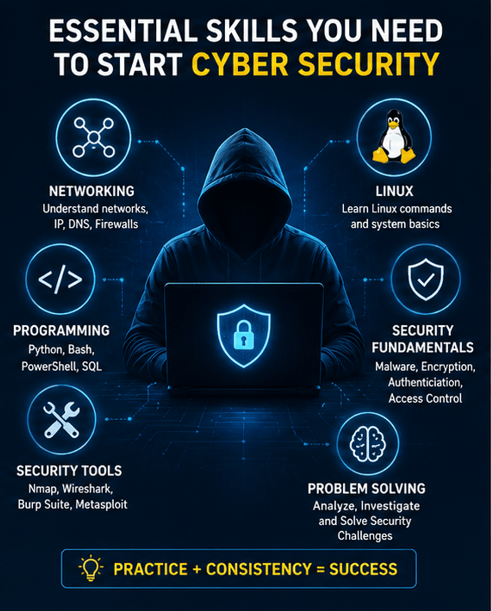
You don’t need to know everything before getting started.
Instead, focus on learning the basics.
Networking
Understand:
- IP addresses
- DNS
- Routers
- Firewalls
- VPNs
- TCP/IP
- HTTP and HTTPS
Networking forms the foundation of cyber security.
Operating Systems
Learn both:
- Windows
- Linux
Linux is especially important because many security tools run on Linux systems.
Basic Programming
Programming helps automate tasks and understand vulnerabilities.
Popular languages include:
- Python
- JavaScript
- Bash
- PowerShell
- SQL
Python is the best language for beginners.
Security Fundamentals
Learn topics such as:
- Malware
- Phishing
- Encryption
- Authentication
- Access control
- Firewalls
- Antivirus
- Vulnerability management
To understand common web security risks, you can also review the OWASP Top 10, which explains the most critical web application security vulnerabilities.
Problem Solving
Cyber security professionals constantly analyze situations and investigate incidents.
Critical thinking is one of the most valuable skills.
Step-by-Step Guide on How to Get Into Cyber Security
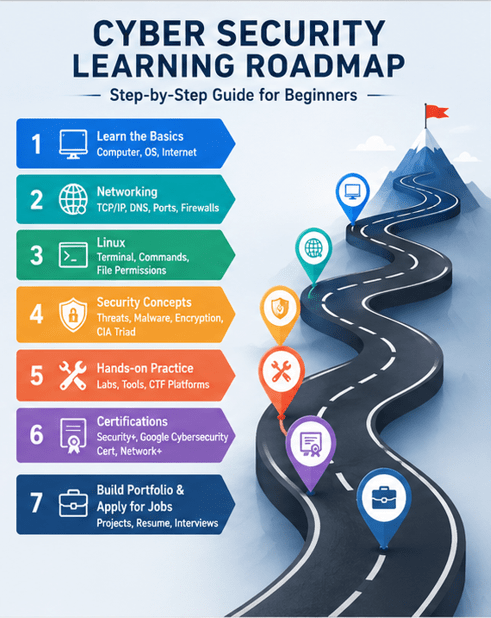
Step 1: Learn Computer Basics
Start by understanding:
- Computer hardware
- Operating systems
- Software
- Internet basics
- Networking
This creates the foundation for everything else.
Step 2: Learn Networking
Networking knowledge is essential.
Study:
- TCP/IP
- DNS
- Ports
- Routers
- Switches
- Firewalls
Free online courses can help you master these concepts.
Step 3: Learn Linux
Linux is widely used in cyber security.
Practice:
- Terminal commands
- File permissions
- User management
- Package installation
- Networking commands
Step 4: Understand Cyber Security Concepts
Study topics including:
- CIA Triad
- Risk management
- Threat intelligence
- Password security
- Social engineering
- Malware analysis
Step 5: Build a Home Lab
Hands-on practice is essential.
Create a home lab using:
- VirtualBox
- VMware
- Kali Linux
- Windows virtual machines
Practice safely in a virtual environment.
Step 6: Learn Cyber Security Tools
Some popular beginner tools include:
- Wireshark
- Nmap
- Burp Suite Community Edition
- Metasploit Framework
- Nessus Essentials
- John the Ripper
Start with one tool at a time.
Step 7: Practice on Legal Platforms
Several websites allow beginners to practice legally.
Popular platforms include:
These platforms provide practical experience that employers value.
Step 8: Earn Beginner Certifications
Certifications help demonstrate your knowledge.
Popular beginner certifications include:
- CompTIA Security+
- CompTIA Network+
- Google Cybersecurity Certificate
- ISC2 Certified in Cybersecurity (CC)
These certifications are excellent starting points.
Step 9: Build a Portfolio
Document your learning.
Include:
- Lab projects
- Capture The Flag (CTF) challenges
- Security reports
- GitHub repositories
- Scripts you’ve written
A portfolio can help you stand out from other applicants.
Step 10: Apply for Entry-Level Jobs
Don’t wait until you know everything.
Start applying for:
- IT Support
- Security Analyst
- SOC Analyst
- Junior Security Engineer
- Help Desk
- Technical Support
Many cyber security professionals begin in IT before moving into security roles.
Read Our Guide On:
Best Cyber Security Career Paths
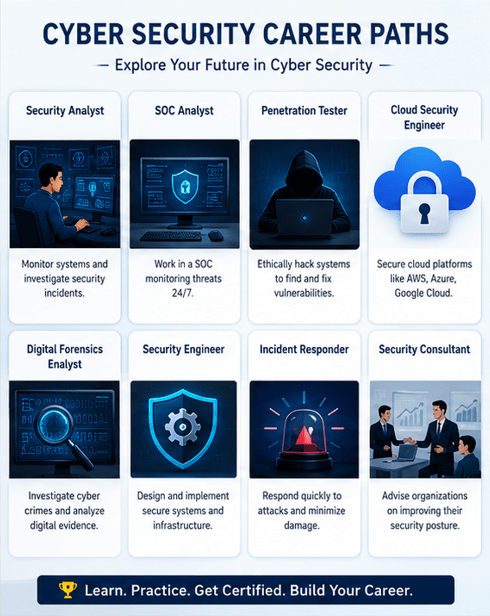
Cyber security offers many specializations.
Security Analyst
Monitors networks and investigates security incidents.
SOC Analyst
Works in a Security Operations Center monitoring threats around the clock.
Penetration Tester
Ethically hacks systems to identify vulnerabilities before attackers do.
Cloud Security Engineer
Protects cloud platforms like AWS, Azure, and Google Cloud.
Digital Forensics Analyst
Investigates cyber crimes and recovers digital evidence.
Security Engineer
Designs and implements secure systems and infrastructure.
Incident Responder
Responds quickly to cyber attacks and minimizes damage.
Security Consultant
Advises organizations on improving their security posture.
Best Certifications for Beginners
CompTIA Security+
One of the most recognized beginner certifications.
Best for:
- New learners
- Entry-level jobs
Google Cybersecurity Certificate
Designed for complete beginners.
Covers practical cyber security concepts.
ISC2 Certified in Cybersecurity (CC)
A respected entry-level certification that introduces security principles.
CompTIA Network+
Builds strong networking knowledge.
Excellent before Security+.
Do You Need a Degree?
No.
Many employers now focus more on:
- Skills
- Certifications
- Practical experience
- Problem-solving ability
A degree can help, but it is no longer the only path into cyber security.
How Long Does It Take to Get Into Cyber Security?
Your timeline depends on your background.
Typical learning paths:
- Beginner with no experience: 6–12 months
- IT professional: 3–6 months
- Computer science graduate: 2–6 months
Consistent daily practice makes the biggest difference.
Common Mistakes Beginners Make
Avoid these common mistakes:
- Trying to learn everything at once
- Skipping networking fundamentals
- Ignoring Linux
- Focusing only on certifications
- Not practicing hands-on labs
- Giving up too early
- Learning without building projects
Free Resources to Learn Cyber Security
Many excellent learning resources are available for free.
Popular options include:
- YouTube tutorials
- TryHackMe beginner rooms
- Hack The Box Academy
- OWASP documentation
- Cisco Networking Academy
- Microsoft Learn
- FreeCodeCamp
Use multiple resources to build a well-rounded understanding.
Entry-Level Cyber Security Jobs
Good beginner positions include:
- IT Support Technician
- Help Desk Technician
- Junior SOC Analyst
- Information Security Analyst
- Security Operations Analyst
- Network Support Technician
- Junior Security Engineer
These roles provide valuable real-world experience.
Tips to Get Your First Cyber Security Job
Follow these practical tips:
- Study consistently every week.
- Build a home lab.
- Earn one or two respected certifications.
- Complete practical labs.
- Participate in CTF competitions.
- Create a GitHub portfolio.
- Network with professionals on LinkedIn.
- Customize your resume for each job.
- Practice interview questions.
- Never stop learning.
Future of Cyber Security
Cyber security will remain one of the fastest-growing technology fields.
Emerging areas include:
- Artificial Intelligence Security
- Cloud Security
- Zero Trust Architecture
- IoT Security
- Mobile Security
- Identity and Access Management
- Threat Intelligence
- Security Automation
Learning these technologies can improve your career opportunities.
Read Our Guide On:
Cyber Hygiene Checklist: 20 Essential Tips to Stay Secure Online
Frequently Asked Questions (FAQs)
1. Can I get into cyber security without a degree?
Yes. Many professionals enter cyber security through self-learning, certifications, and hands-on experience instead of earning a traditional degree.
2. What is the best certification for beginners?
CompTIA Security+ and the Google Cybersecurity Certificate are among the best beginner-friendly certifications.
3. Is coding required for cyber security?
Not every role requires coding, but learning Python and basic scripting can improve your skills and career opportunities.
4. How long does it take to learn cyber security?
Most beginners can develop job-ready skills in 6 to 12 months with consistent study and practical experience.
5. Is cyber security a good career?
Yes. It offers strong job demand, competitive salaries, career growth, and opportunities across many industries.
6. Can I learn cyber security at home?
Yes. You can learn through online courses, virtual labs, CTF challenges, and self-paced practice from home.
7. Which programming language should I learn first?
Python is widely recommended for beginners because it is easy to learn and commonly used in cyber security.
8. What is the easiest cyber security job to start with?
Entry-level positions such as IT Support Technician, Help Desk Technician, or Junior SOC Analyst are common starting points.
Conclusion
Learning how to get into cyber security may seem overwhelming at first, but anyone with dedication and a willingness to learn can build a successful career. Start by mastering computer and networking basics, then learn Linux, explore cyber security concepts, and practice with real-world labs. Earning beginner certifications and building a portfolio of projects can significantly improve your chances of landing your first job.
Cyber security is more than just a career—it is a field that offers continuous learning, exciting challenges, and excellent long-term opportunities. By following a structured learning path and gaining practical experience, you can confidently begin your journey into one of the most rewarding industries in technology.

Mehtab Hassan is the founder and tech writer at Brozly, where he publishes easy-to-understand articles on AI, software, cybersecurity, smartphones, laptops, and emerging technology. His goal is to help readers make smarter tech decisions through detailed reviews, practical tutorials, and beginner-friendly guides. He is passionate about exploring the latest innovations and delivering accurate, up-to-date content that everyone can understand.