The top cybersecurity companies in 2026 are helping businesses protect their networks, applications, devices, and sensitive information from increasingly sophisticated cyber threats. From ransomware and phishing to cloud security risks and identity theft, organizations need reliable security solutions to protect their digital assets. Choosing the right cybersecurity provider can help businesses strengthen their defenses and manage security risks more effectively.
This is why choosing from the top cybersecurity companies has become an important decision for businesses, IT teams, and organizations that handle sensitive data.
Some cybersecurity companies specialize in endpoint protection and threat detection, while others focus on network security, cloud protection, identity management, or managed security services. Several providers also use artificial intelligence (AI) to help identify suspicious activities, investigate threats, and automate security operations.
In this guide, we compare 10 leading cybersecurity companies in 2026, explain their main specialties, and discuss which types of organizations may benefit from their solutions. The goal is to help readers understand their options rather than suggest that one company is automatically the best choice for everyone.
Quick Comparison of the Top Cybersecurity Companies
Here is a quick overview of 10 well-known cybersecurity providers and their main areas of focus.
| Company | Best Known For | Main Security Focus |
|---|---|---|
| Palo Alto Networks | Enterprise security platforms | Network, cloud, and security operations |
| CrowdStrike | Endpoint protection | EDR, XDR, and threat intelligence |
| Fortinet | Network security | Firewalls, network protection, and SASE |
| Microsoft Security | Integrated business security | Endpoint, identity, cloud, and SIEM |
| Cisco | Enterprise network security | Network protection, access, and XDR |
| Check Point Software | Threat prevention | Network, workspace, and AI security |
| Zscaler | Zero-trust security | Cloud access and secure connectivity |
| Cloudflare | Website and application security | DDoS protection, WAF, and zero trust |
| SentinelOne | AI-powered endpoint security | Endpoint, cloud, and identity protection |
| IBM Security | Enterprise security services | Consulting, managed security, and threat intelligence |
These companies are presented as an editorial shortlist, not a universal ranking. Their capabilities, target customers, and product offerings are different, so the right provider depends on the security requirements of each organization.
1. Palo Alto Networks
Palo Alto Networks is one of the major names in enterprise cybersecurity. The company provides security technologies designed to protect business networks, cloud environments, applications, and security operations.
Its product ecosystem includes network security, cloud security, and security operations capabilities. Businesses can use different parts of its platform to monitor threats, manage network protection, and improve visibility across their digital infrastructure.
One of its important areas is its Cortex security operations portfolio, which supports threat detection, investigation, and response. Its Prisma portfolio also addresses cloud security and secure access requirements.
Key capabilities:
- Next-generation network firewalls.
- Cloud security and workload protection.
- Security operations and threat detection.
- Automated incident investigation and response.
- AI-related security solutions.
Who should consider it?
Palo Alto Networks may be suitable for medium-sized and large organizations that need broad security coverage across complex networks, cloud infrastructure, and business applications.
Official website: https://www.paloaltonetworks.com/
2. CrowdStrike
CrowdStrike is widely known for its endpoint security and threat detection technology. Its Falcon platform helps organizations monitor and protect computers, servers, cloud workloads, and other connected environments.
Endpoint protection is especially important because employee devices can become entry points for cyberattacks. If an attacker compromises one device, they may attempt to access additional systems or sensitive information.
CrowdStrike focuses on identifying suspicious behavior, detecting threats, and helping security teams investigate potential incidents. Its platform also covers areas such as identity protection, cloud security, and security operations.
Key capabilities:
- Endpoint detection and response (EDR).
- Extended detection and response (XDR).
- Threat intelligence.
- Cloud workload protection.
- Identity threat detection and protection.
Who should consider it?
CrowdStrike may be a good option for organizations that prioritize endpoint protection, advanced threat detection, and centralized security monitoring.
3. Fortinet
Fortinet is a major cybersecurity provider known for network security products and integrated security infrastructure.
Its FortiGate firewalls are among its best-known products. They help organizations inspect network traffic, manage access, and protect connected systems against potential threats.
Fortinet also provides technologies for secure networking, cloud environments, endpoint protection, and operational technology security.
Its broader security ecosystem can be useful for businesses that want to manage several security functions through connected products.
Key capabilities:
- Next-generation firewalls.
- Secure networking and SD-WAN.
- Network threat prevention.
- Cloud security.
- Security operations and monitoring.
Who should consider it?
Fortinet may be suitable for businesses that need strong network protection, branch office security, firewall management, or integrated network and security infrastructure.
4. Microsoft Security
Key capabilities:
- Microsoft Defender security products.
- Microsoft Sentinel SIEM.
- Microsoft Entra identity protection.
- Cloud and data security.
- AI-assisted security operations.
Who should consider it?
Microsoft Security can be particularly useful for businesses that already depend on Microsoft products and want to integrate security management into their existing technology environment.
5. Cisco
Cisco is another established technology company with a broad cybersecurity portfolio. Its security solutions help organizations protect networks, manage access, and identify suspicious activities across connected systems.
Network security is one of Cisco’s important strengths. Businesses can use its security technologies to manage network access, protect applications, and improve visibility across their infrastructure.
Cisco also provides solutions such as Cisco Duo for multi-factor authentication and Cisco XDR for threat detection and response.
Key capabilities:
- Network and firewall security.
- Multi-factor authentication.
- Extended detection and response.
- Secure access solutions.
- Multicloud security.
Who should consider it?
Cisco may be a suitable choice for organizations with complex network environments, multiple locations, and existing Cisco infrastructure.
6. Check Point Software
Check Point Software focuses on preventing cyber threats across networks, business workspaces, cloud environments, and other digital assets.
The company provides security technologies for organizations that want to strengthen protection against malware, phishing, unauthorized access, and other security risks.
Its security portfolio covers network security, workspace security, exposure management, and AI security. These capabilities are relevant to organizations managing a combination of traditional infrastructure and modern cloud-based systems.
Key capabilities:
- Network threat prevention.
- Workspace and endpoint security.
- Cloud security.
- Exposure management.
- AI security solutions.
Who should consider it?
Check Point may be worth evaluating for businesses that prioritize threat prevention and need protection across networks, employee devices, and cloud environments.
7. Zscaler
Zscaler is particularly known for its cloud-based zero-trust security approach.
Traditional network security often relies on protecting a company’s internal network perimeter. However, modern employees may access business applications from different locations, devices, and networks.
Zscaler addresses this challenge through its Zero Trust Exchange platform. Instead of automatically trusting users because they are connected to a particular network, zero-trust systems evaluate identity, device security, and access requirements.
Its services include secure internet access, private application access, data protection, and cloud-based security capabilities.
Key capabilities:
- Zero-trust network access.
- Secure web gateway.
- Security Service Edge (SSE).
- Cloud application protection.
- Data loss prevention.
Who should consider it?
Zscaler may be a good option for businesses with remote employees, cloud-based applications, and distributed work environments.
8. Cloudflare
Cloudflare is known for website performance, network services, and application security. It also provides cybersecurity solutions that help protect websites, APIs, and online applications.
Its security services include distributed denial-of-service (DDoS) protection, web application firewall (WAF), bot protection, and zero-trust access solutions.
For website owners, DDoS protection and web application security can be particularly valuable. These technologies help reduce the risk of malicious traffic, automated attacks, and common application vulnerabilities.
Key capabilities:
- DDoS protection.
- Web application firewall.
- API security.
- Bot management.
- Zero-trust network access.
Who should consider it?
Cloudflare may be useful for website owners, online businesses, developers, and organizations that need to protect internet-facing applications and digital services.
9. SentinelOne
SentinelOne is a cybersecurity company focused on AI-powered security and automated threat response.
Its Singularity platform brings together endpoint, cloud, identity, and security operations capabilities. It is designed to help organizations detect suspicious activities and respond to potential threats across their digital environments.
One of its main strengths is endpoint protection. Security teams can use its technologies to investigate malicious behavior and automate selected response actions.
Its Purple AI capabilities also support security analysts by helping them work with security information and investigate threats.
Key capabilities:
- AI-powered endpoint protection.
- Endpoint detection and response.
- Cloud security.
- Identity protection.
- Automated threat investigation and response.
Who should consider it?
SentinelOne may be worth considering for organizations that want advanced endpoint protection and automated security operations.
10. IBM Security
IBM Security provides enterprise cybersecurity technologies and professional security services for organizations with complex security requirements.
IBM’s cybersecurity work includes security consulting, managed security services, threat intelligence, identity and access management, and data protection.
Its X-Force team also contributes cybersecurity research, threat intelligence, and incident response expertise.
For large organizations, security is not only about purchasing software. They may also need help evaluating risks, managing compliance requirements, responding to incidents, and developing long-term security strategies.
Key capabilities:
- Cybersecurity consulting.
- Managed security services.
- Threat intelligence.
- Identity and access management.
- Incident response support.
Who should consider it?
IBM may be suitable for large businesses and enterprises that need a combination of cybersecurity technology, professional expertise, and ongoing security services.
How to Choose the Right Cybersecurity Company
Choosing a cybersecurity provider should start with understanding the problems an organization needs to solve.
A business that mainly needs website protection may not require the same services as a large enterprise managing thousands of employee devices and multiple cloud environments.
Here are some important factors to evaluate before making a decision.
1. Identify Your Security Requirements
Start by reviewing your existing technology environment.
Consider whether your biggest concerns involve network attacks, ransomware, cloud security, employee devices, identity theft, or data exposure.
Understanding these requirements makes it easier to compare providers that specialize in the areas you actually need.
2. Compare Product Capabilities
Do not choose a provider simply because it has a recognizable brand name.
Review its security products and check whether they cover your important requirements, including endpoint protection, network security, threat detection, cloud protection, and incident response.
You can also compare different types of cybersecurity software to understand which solutions are relevant to your organization.
3. Evaluate AI and Automation Features
Artificial intelligence is becoming increasingly important in cybersecurity.
Some providers use AI to identify unusual activity, analyze security alerts, prioritize vulnerabilities, and assist with incident investigations.
However, AI capabilities should not be treated as a guarantee that every threat will be detected. Human oversight, reliable security controls, and proper incident response procedures remain important.
4. Check Integration and Compatibility
A security solution should work with your existing systems and business applications.
Before selecting a company, check whether its products integrate with your operating systems, cloud platforms, identity systems, network infrastructure, and other security tools.
Poor integration can create additional work and make security management more complicated.
5. Review Pricing and Support
Cybersecurity pricing depends on the provider, products, number of users, devices, deployment requirements, and level of support.
Some products offer publicly listed plans, while enterprise solutions may require a customized quotation.
Ask providers about technical support, incident response availability, service agreements, renewal costs, and additional charges before signing a contract.
6. Understand the Provider’s Security Responsibilities
If a company offers managed security services, understand exactly what it will manage.
For example, will the provider monitor alerts around the clock? Will it investigate incidents? Can it take immediate action, or will it only recommend what your internal team should do?
A clear service-level agreement helps prevent confusion when a real security incident occurs.
How AI Is Changing the Cybersecurity Industry
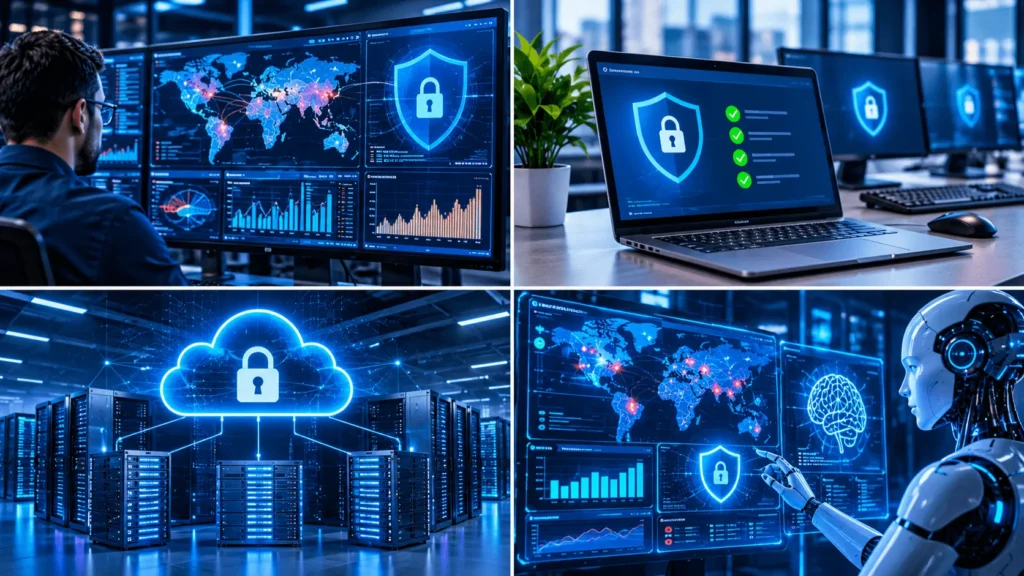
Artificial intelligence is influencing how cybersecurity companies develop and deliver security solutions.
Modern security platforms can use AI and machine learning to process large amounts of information, recognize unusual patterns, and help analysts investigate suspicious activities.
Some important applications include:
- Threat detection: AI can help identify unusual behavior across networks and connected devices.
- Phishing analysis: Intelligent systems can examine suspicious messages, links, and attachments.
- Malware investigation: AI can assist researchers in understanding suspicious files and analyzing technical information.
- Security automation: Automated workflows can help teams organize alerts and perform approved response actions.
- Threat intelligence: AI can help security professionals summarize reports and identify relevant threat information.
However, artificial intelligence also introduces new challenges. Cybercriminals can use AI to create more convincing phishing messages, automate certain attacks, and develop sophisticated scams.
This is why cybersecurity companies are increasingly focusing on protecting both traditional IT infrastructure and emerging AI systems.
Organizations interested in this development can also explore how generative AI is being used in cybersecurity and how AI may change the future of the cybersecurity profession.
Cybersecurity Companies vs. Managed Security Service Providers
Not every cybersecurity company operates in the same way.
Some companies mainly develop security software and platforms. Others provide professional services, monitoring, consulting, and incident response.
A technology vendor may sell endpoint protection software, firewalls, or cloud security tools. A managed security service provider (MSSP), on the other hand, may operate security monitoring systems and help manage an organization’s security responsibilities.
Some companies offer both products and services.
For smaller organizations without a dedicated security team, cybersecurity as a service can be a practical option. It allows businesses to obtain selected security tools, monitoring, and professional support from an external provider.
The best model depends on the company’s budget, internal expertise, security risks, and operational requirements.
Why Cybersecurity Is Important for Every Business
Cybersecurity is no longer an issue limited to large technology companies.
Small businesses, online stores, healthcare organizations, financial institutions, and educational organizations all depend on digital systems.
A successful cyberattack can expose sensitive information, interrupt business operations, damage customer trust, and create recovery expenses.
Businesses should therefore combine reliable security technology with strong internal practices.
These include:
- Using multi-factor authentication.
- Keeping software and operating systems updated.
- Restricting access to sensitive information.
- Maintaining secure backups.
- Training employees to recognize phishing attempts.
- Monitoring suspicious account and network activity.
- Following a documented incident response plan.
Organizations can also use a structured approach such as the NIST Cybersecurity Framework to identify, manage, and reduce cybersecurity risks.
Final Thoughts
The top cybersecurity companies in 2026 offer different solutions for protecting modern businesses. Palo Alto Networks, CrowdStrike, Fortinet, Microsoft, Cisco, Check Point, Zscaler, Cloudflare, SentinelOne, and IBM each bring different capabilities to the cybersecurity industry.
Some specialize in endpoint protection, others focus on network security, cloud environments, zero-trust access, or professional security services.
There is no single cybersecurity company that is automatically the best for every organization. The right choice depends on your existing infrastructure, security requirements, available budget, and the level of support you need.
Before selecting a provider, compare its products, integration options, support arrangements, and security capabilities. A carefully selected cybersecurity solution can help businesses strengthen their defenses and manage digital risks more effectively.
Frequently Asked Questions
1. What are the top cybersecurity companies in 2026?
Some of the well-known cybersecurity companies in 2026 include Palo Alto Networks, CrowdStrike, Fortinet, Microsoft Security, Cisco, Check Point, Zscaler, Cloudflare, SentinelOne, and IBM Security. Each company specializes in different areas of cybersecurity.
2. Which cybersecurity company is best for businesses?
The best company depends on the organization’s requirements. CrowdStrike and SentinelOne are known for endpoint protection, Palo Alto Networks and Fortinet offer broad network security capabilities, while Microsoft provides integrated security products for its business ecosystem.
3. Which cybersecurity companies offer AI-powered security?
Several providers offer AI-related security capabilities, including Microsoft, Palo Alto Networks, CrowdStrike, and SentinelOne. Their technologies can support threat detection, security analysis, automation, and incident investigation.
4. Are cybersecurity companies suitable for small businesses?
Yes. Small businesses can use cybersecurity products and managed security services to protect their devices, networks, websites, and business information. The right solution depends on their budget, technical resources, and security risks.
5. What services do cybersecurity companies provide?
Common services include network security, endpoint protection, cloud security, threat monitoring, vulnerability management, identity protection, security consulting, and incident response.
6. What is the difference between a cybersecurity company and an antivirus company?
An antivirus company generally focuses on detecting and preventing malicious software. A broader cybersecurity company may offer additional services such as network security, cloud protection, identity management, threat intelligence, and incident response.
7. How much do cybersecurity services cost?
Costs vary depending on the provider, number of users and devices, selected security products, monitoring requirements, and support arrangements. Enterprise services often require customized pricing.
8. Why is AI important in cybersecurity?
AI can help security teams process large amounts of information, identify unusual behavior, investigate threats, and automate repetitive tasks. However, human professionals remain important for reviewing findings and making critical security decisions.
9. What should businesses check before choosing a cybersecurity provider?
Businesses should compare security capabilities, product compatibility, pricing, technical support, incident response procedures, data protection practices, and the provider’s experience with similar organizations.
10. Can one cybersecurity company protect an entire business?
Some providers offer broad security platforms, but no single solution should be assumed to cover every risk. Many organizations combine multiple security products and services to protect their networks, devices, identities, applications, and data.