An AI data center is a specialized facility designed to provide the powerful computing resources needed to train and run artificial intelligence systems. It uses advanced GPUs, high-speed networking, large storage systems, and specialized cooling technology to handle demanding AI workloads. From AI chatbots and image generators to machine learning applications, AI data centers provide the infrastructure that makes modern artificial intelligence possible.
This is where an AI data center comes in.
An AI data center is a specialized facility designed to provide the computing power, storage, networking, electricity, and cooling needed to train and run artificial intelligence models. Unlike traditional data centers, these facilities are built to handle demanding AI workloads that require large amounts of processing power and fast communication between computers.
As artificial intelligence continues to grow, AI data centers are becoming an important part of the technology industry. In this guide, we will explain what an AI data center is, how it works, what equipment it uses, and why it matters for the future of AI.
What Is an AI Data Center?
An AI data center is a facility that contains specialized computers, servers, storage systems, networking equipment, and cooling infrastructure designed to support artificial intelligence workloads.
These facilities provide the computing resources needed to train machine learning models, develop generative AI systems, process large datasets, and respond to requests from AI applications.
For example, when someone asks an AI chatbot a question, powerful computers process that request and generate a response. Those computers may be operating inside an AI-ready data center.
Unlike a regular office server room, an AI data center is designed for intensive computing tasks. It often uses powerful graphics processing units (GPUs), high-speed networking, advanced storage, and specialized cooling systems.
In simple terms, an AI data center is the physical infrastructure that helps artificial intelligence systems learn, process information, and deliver results.
How Does an AI Data Center Work?
An AI data center works by connecting powerful computing systems so they can process large amounts of information efficiently.
When an AI application receives a task, the data center provides the computing resources needed to complete it. Depending on the task, this may involve processing data, running an AI model, or performing complex calculations across multiple servers.
Here is a simplified explanation of how the process works.
1. Data Is Collected and Stored
AI systems need data to learn patterns and produce useful results. This information can include text, images, videos, audio, and other digital files.
AI data centers use large storage systems to organize and manage these datasets. The information is then made available to computing servers when needed.
2. Powerful Processors Handle the Work
Once the data is ready, specialized processors perform the calculations required by the AI system.
Graphics processing units (GPUs) are particularly useful because they can perform many calculations simultaneously. This makes them suitable for machine learning and deep learning workloads.
3. AI Models Process Information
AI models use mathematical operations to identify patterns, understand information, or generate predictions.
For example, a language model can process a user’s question and predict an appropriate response. An image recognition model can analyze a picture and identify objects inside it.
4. Networking Connects the Servers
Large AI workloads often require multiple computers to work together.
High-speed networking equipment allows servers and GPUs to exchange information quickly. This is important because delays in communication can slow down complex AI tasks.
5. Cooling Systems Control Heat
Powerful processors generate heat while working. AI data centers use advanced cooling systems to maintain suitable operating temperatures.
Without proper cooling, equipment may become too hot, reduce its performance, or experience hardware problems.
Key Components of an AI Data Center
An AI data center is not just a building filled with computers. It is a combination of hardware, software, electrical systems, and cooling technology that must work together.
Let’s look at its main components.
1. Graphics Processing Units (GPUs)
GPUs are among the most important components of modern AI infrastructure.
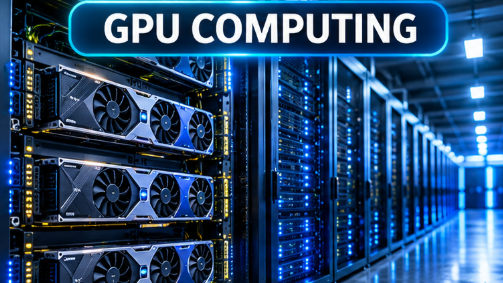
Unlike CPUs, which are designed for a wide range of general computing tasks, GPUs can perform many similar calculations in parallel. This makes them useful for training large AI models and processing demanding machine learning workloads.
Companies use GPU-powered servers to develop generative AI applications, language models, computer vision systems, and other intelligent technologies.
2. Central Processing Units (CPUs)
CPUs are also important in AI data centers.
They manage general computing operations, coordinate tasks, handle system processes, and work alongside GPUs. While GPUs perform many specialized AI calculations, CPUs help manage the overall computing environment.
Both processors play important roles in a well-designed AI system.
3. High-Speed Networking
AI models can require several servers to work together. These servers need to exchange large amounts of information without unnecessary delays.
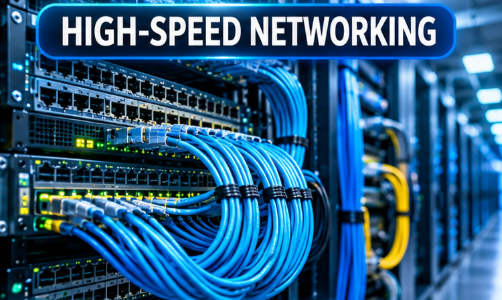
High-speed networking equipment connects servers, storage systems, and computing clusters. Technologies such as high-performance Ethernet and InfiniBand can support demanding communication requirements.
Efficient networking helps AI systems process information more smoothly.
4. Data Storage Systems
AI applications depend on large datasets, model files, and other information.
Storage systems keep this information organized and accessible. They may include solid-state drives, distributed storage platforms, databases, and other high-capacity storage technologies.
Fast storage is especially useful when AI systems need to access large datasets during training.
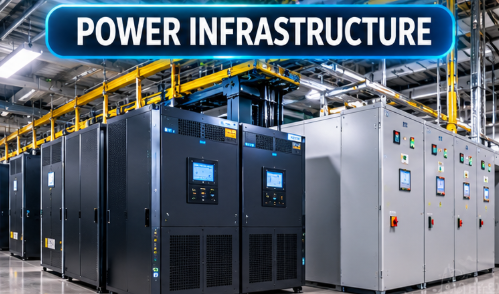
5. Power Infrastructure
AI data centers require reliable electricity to operate their servers and supporting equipment.
Their power infrastructure can include transformers, electrical distribution systems, uninterruptible power supplies (UPS), and backup generators.
These systems help deliver stable electricity and reduce the risk of interruptions.
6. Advanced Cooling Systems
AI processors generate significant amounts of heat, especially when many GPUs operate together.
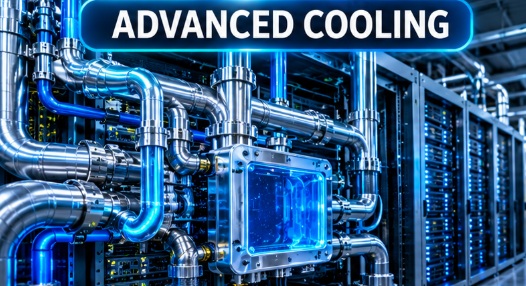
Cooling systems help remove this heat and maintain suitable operating conditions.
Depending on the facility and hardware design, cooling may use air-based systems, liquid cooling, or a combination of different technologies.
AI Data Center vs. Traditional Data Center
AI data centers and traditional data centers share several components, including servers, storage, networking, power systems, and security infrastructure.
However, their main difference is the type of workload they are designed to handle.
Traditional data centers commonly support websites, business applications, databases, email services, and cloud platforms. AI data centers are optimized for demanding artificial intelligence tasks, such as model training and AI inference.
Here is a simple comparison:
| Feature | AI Data Center | Traditional Data Center |
|---|---|---|
| Main purpose | AI training and inference | General computing and data services |
| Processing hardware | GPUs and AI accelerators | Often CPU-focused |
| Networking | High-speed, low-latency connections | General-purpose networking |
| Cooling | Often advanced cooling solutions | Often conventional air cooling |
| Workloads | Machine learning and generative AI | Websites, databases, and applications |
| Computing demands | Often highly intensive | Varies by application |
Not every traditional data center is unsuitable for AI. Some facilities can be upgraded to support AI workloads, depending on their available power, cooling, networking, and hardware capabilities.
What Are AI Data Centers Used For?
AI data centers support many technologies and services that people and businesses use today.
Some important applications include:
Generative AI and Chatbots
Generative AI systems can create text, images, code, and other types of content. AI data centers provide the computing resources needed to train and operate these systems.
Chatbots and virtual assistants also depend on computing infrastructure to process questions and generate responses.
Machine Learning
Machine learning systems analyze data to identify patterns and make predictions.
Businesses use these systems for fraud detection, customer recommendations, forecasting, and process automation.
Image and Video Recognition
AI-powered image and video recognition systems can identify objects, analyze visual information, and support different computer vision applications.
These technologies are used in manufacturing, healthcare research, security systems, and other industries.
Scientific Research
Researchers use AI computing resources to analyze complex datasets, run simulations, and support scientific discoveries.
AI can assist with areas such as climate research, drug discovery, and advanced engineering.
Business Automation
Companies use AI applications to automate repetitive tasks, analyze business information, improve customer support, and increase productivity.
AI data centers provide the infrastructure needed to run these applications at scale.
Benefits of AI Data Centers
AI data centers offer several advantages for organizations developing and using artificial intelligence.
Faster AI Processing
Specialized processors and high-speed networking allow AI systems to handle demanding workloads more efficiently.
Support for Large AI Models
Modern AI models can contain billions of parameters and require substantial computing resources. AI data centers provide the infrastructure needed to train and operate these models.
Better Scalability
Organizations can expand their computing resources as their AI applications grow. Cloud services and specialized data center providers can also give businesses access to infrastructure without building their own facilities.
Improved AI Services
Reliable computing infrastructure helps support AI applications such as chatbots, recommendation systems, automated tools, and intelligent search services.
Support for Innovation
Access to powerful computing resources allows researchers, developers, and businesses to experiment with new AI technologies and develop more advanced applications.
Challenges of AI Data Centers
Although AI data centers provide important benefits, building and operating them also involves several challenges.
High Electricity Consumption
AI computing equipment requires significant amounts of electricity, particularly when large groups of GPUs operate continuously.
This makes energy availability, efficiency, and cost important considerations for data center operators.
Cooling Requirements
High-performance processors generate substantial heat. Managing this heat requires carefully designed cooling infrastructure.
Some high-density AI environments use liquid cooling to transfer heat more effectively from computing equipment.
Expensive Infrastructure
GPUs, networking equipment, power systems, storage, and cooling technology can require substantial investment.
Building an AI data center is therefore a major undertaking for most organizations.
Environmental Impact
Electricity consumption and cooling requirements can affect the environmental footprint of data centers.
Operators are exploring more efficient hardware, renewable energy sources, improved cooling methods, and better facility management to reduce these impacts.
Data Security
AI data centers may process sensitive business information, personal data, and valuable intellectual property.
Strong cybersecurity, access controls, encryption, monitoring, and data governance are important for protecting these systems.
Why Are AI Data Centers Becoming More Important?
The demand for AI computing is increasing as more businesses, developers, and consumers use artificial intelligence.
Generative AI tools, large language models, automated business systems, and intelligent applications all require computing infrastructure.
As these technologies become more advanced, organizations need facilities capable of handling larger workloads and moving information between processors quickly.
AI data centers help meet this demand by bringing specialized computing, networking, storage, electricity, and cooling systems together.
They are also becoming important to cloud service providers and technology companies that offer AI services to customers around the world.
What Is the Future of AI Data Centers?
The future of AI data centers will likely involve improvements in computing performance, energy efficiency, cooling technology, and infrastructure design.
Several developments are worth watching.
More Powerful AI Chips
Hardware manufacturers continue to develop specialized processors designed to handle AI workloads more efficiently. Future improvements may increase computing performance while helping reduce energy consumption per task.
Wider Use of Liquid Cooling
As AI hardware becomes more powerful, liquid cooling is becoming an important option for high-density computing environments.
These systems can remove heat directly from certain components, helping facilities manage demanding workloads.
Greater Focus on Renewable Energy
Energy efficiency and environmental responsibility are becoming important considerations for data center operators.
Some organizations are exploring renewable electricity, improved power management, and more efficient facility designs.
Expansion of Cloud AI Infrastructure
Cloud platforms make AI computing resources accessible to organizations that do not have the budget or technical resources to build their own data centers.
This can help more businesses develop and deploy AI applications.
Smarter Data Center Management
Automation and intelligent monitoring can help operators manage workloads, monitor equipment, identify potential problems, and improve overall efficiency.
Frequently Asked Questions About AI Data Centers
What is an AI data center in simple words?
An AI data center is a specialized facility filled with powerful computers, GPUs, storage systems, and networking equipment that help artificial intelligence systems learn, process information, and generate results.
What is the main purpose of an AI data center?
Its main purpose is to provide the computing infrastructure required to train, deploy, and operate artificial intelligence applications and models.
How are AI data centers different from normal data centers?
AI data centers are designed for intensive AI workloads and commonly use powerful GPUs, high-speed networking, and advanced cooling systems. Traditional data centers often focus on general computing tasks such as websites, databases, and business applications.
Why do AI data centers use GPUs?
GPUs can perform many calculations simultaneously, making them useful for machine learning, deep learning, and other AI workloads.
Do AI data centers consume a lot of electricity?
Yes. Large AI data centers can require significant amounts of electricity because they operate powerful computing equipment and supporting cooling systems.
Do AI data centers use liquid cooling?
Some AI data centers use liquid cooling, particularly when operating high-density GPU servers that generate substantial heat. Other facilities may use air cooling or hybrid approaches.
Can small businesses use AI data centers?
Yes. Small businesses can access AI computing resources through cloud platforms and specialized service providers without building their own data centers.
Are AI data centers important for generative AI?
Yes. They provide the computing power, storage, and networking needed to train and operate generative AI models, including systems that create text, images, audio, and code.
Final Thoughts
AI data centers are an important part of the infrastructure behind modern artificial intelligence. They combine specialized processors, storage, networking, electricity, and cooling systems to support demanding AI workloads.
From chatbots and image generators to scientific research and business automation, many AI applications depend on this infrastructure to operate.
As artificial intelligence continues to develop, AI data centers will play an increasingly important role in making advanced computing services available to businesses, developers, and everyday users.