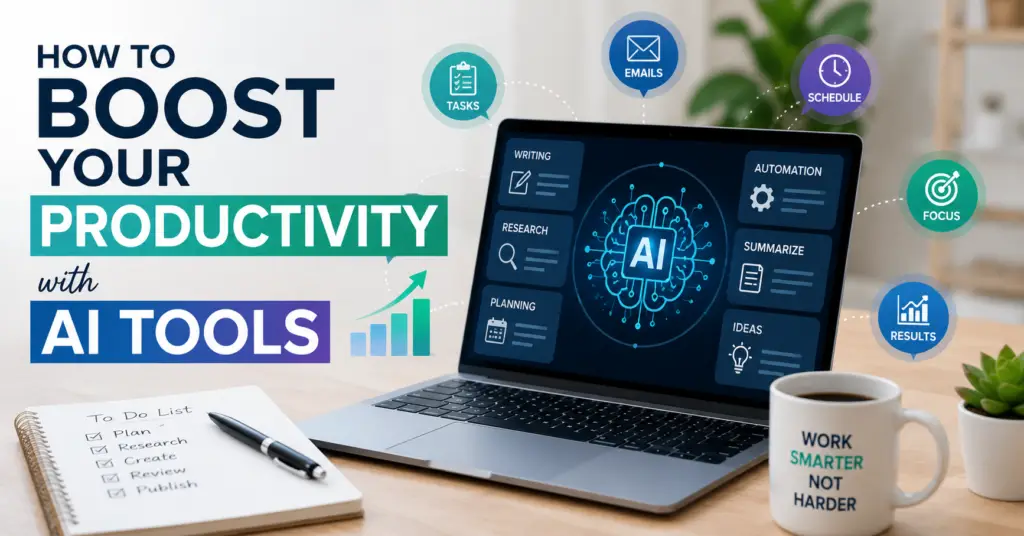
What is the future of AI? Artificial intelligence is changing how people work, learn, communicate, and solve problems. From AI-powered chatbots to advanced robotics and automation, this technology is expected to play an increasingly important role in everyday life. As AI continues to develop, it could create new opportunities while also bringing challenges related to jobs, privacy, and security.
So, what is the future of AI? Artificial intelligence is likely to become more capable, more connected to everyday tools, and increasingly involved in how people work, learn, communicate, and solve problems. From AI-powered robots to intelligent business systems, the technology is expected to influence almost every major industry.
However, its future is not just about smarter machines. Questions about employment, privacy, security, accuracy, and human control will become equally important.
In this guide, we will explore the future of artificial intelligence, the technologies shaping its development, the industries most likely to change, and what people should expect in the coming years.
What Is the Future of AI?
The future of AI refers to how artificial intelligence may develop and influence society, businesses, and everyday life over the coming years. It includes improvements in machine learning, generative AI, autonomous systems, robotics, and other technologies that allow computers to perform increasingly complex tasks.
AI is expected to move from tools that simply respond to instructions toward systems that can understand context, plan activities, and complete multiple steps with limited human assistance.
For example, instead of asking an AI assistant to write a single email, someone may eventually ask it to organize a meeting, prepare documents, compare information, and complete several connected tasks.
This does not mean AI will become perfect or replace human decision-making. Even advanced systems can make mistakes, misunderstand instructions, and produce unreliable information. Human judgment will remain important.
7 Major Trends That Will Shape the Future of AI
Several developments are likely to influence how artificial intelligence evolves. Some are already being used, while others are still developing.
1. AI Agents Will Handle More Complex Tasks
One of the most important developments in artificial intelligence is the growth of AI agents.
Unlike traditional chatbots that mainly respond to questions, AI agents can work through a series of steps to achieve a particular goal. Depending on their permissions and capabilities, they may search for information, use software, organize data, or complete repetitive business tasks.
For example, a business could use an AI agent to collect customer inquiries, organize support requests, prepare reports, and help employees manage their daily workload.
In the future, multiple AI agents may also work together, with each system handling a different part of a larger task.
However, these systems will still need monitoring. Errors, security problems, and unexpected decisions can become serious issues when an AI agent has permission to take action.
2. AI Will Change the Way People Work
The relationship between AI and employment will become one of the biggest discussions in the coming years.
Artificial intelligence can already help employees write reports, analyze spreadsheets, generate code, prepare presentations, and handle routine administrative work. As these tools improve, more workplaces are likely to introduce AI-assisted processes.
Some repetitive tasks may require fewer hours of human effort. At the same time, new opportunities may develop in areas such as AI development, data management, cybersecurity, automation, and AI system supervision.
The impact will not be the same for every profession.
For example, a software developer may use AI to produce an initial version of code but still need to review, test, and improve it. A marketing professional may use AI to research ideas while relying on human experience to understand customers.
Rather than assuming that every job will disappear, it is more useful to understand how individual tasks and required skills may change.
3. AI Will Become More Important in Healthcare
Healthcare is another area where artificial intelligence could make a meaningful difference.
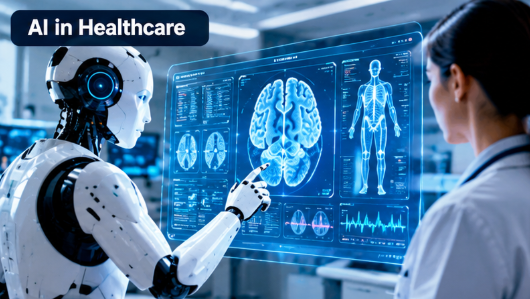
AI systems can help medical researchers analyze large datasets, identify patterns in medical images, and support certain clinical workflows. These capabilities may help healthcare professionals make better-informed decisions.
In the future, AI could contribute to:
- Earlier identification of certain diseases.
- Faster analysis of medical images.
- More personalized treatment research.
- Drug discovery and development.
- Improved management of healthcare records.
AI-powered medical tools may also help healthcare providers manage administrative work, allowing professionals to spend more time with patients.
However, medical AI must be carefully tested. A computer-generated suggestion should not automatically be treated as a medical diagnosis. Qualified healthcare professionals must remain responsible for clinical decisions.
4. Education Will Become More Personalized
Traditional education often follows the same teaching schedule for an entire classroom. However, students do not all learn at the same speed or in the same way.
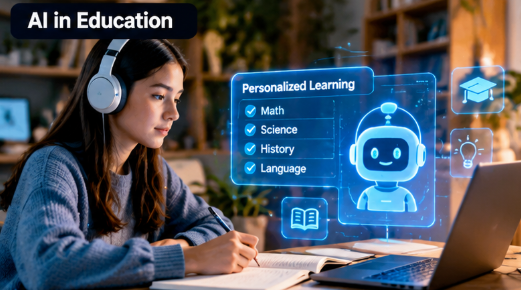
AI could help make education more personalized by adapting explanations, exercises, and learning materials to individual needs.
For example, an AI learning assistant could explain a difficult mathematics problem using simpler language, provide additional practice questions, or help a student understand a science topic.
Teachers may also use AI to prepare lesson materials, organize educational resources, and identify areas where students need additional support.
Still, technology cannot replace everything a teacher provides. Human guidance, classroom discussions, critical thinking, and social development remain essential parts of education.
5. Robotics Will Become More Intelligent
Artificial intelligence is not limited to computers and mobile applications. It is also helping robots understand and interact with the physical world.
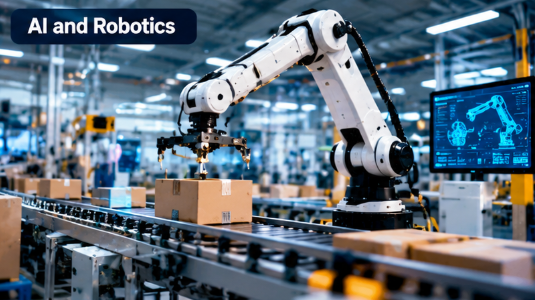
AI-powered robots are being developed for manufacturing, warehouses, agriculture, research, and other environments.
Future robots may become better at recognizing objects, navigating unfamiliar spaces, and performing tasks that require more flexible movements.
For example, an intelligent warehouse robot could identify products, move items between locations, and adjust its actions when the surrounding environment changes.
However, building robots that can operate safely in unpredictable real-world environments remains difficult. Hardware costs, energy requirements, reliability, and safety will influence how quickly these systems become widely available.
6. AI Will Support Scientific Research and Innovation
Scientific research often involves analyzing enormous amounts of information and testing many possible solutions.
Artificial intelligence can help researchers identify patterns, develop predictions, and explore possibilities that might otherwise take much longer to investigate.
In fields such as biology, chemistry, engineering, and materials science, AI-assisted tools may help researchers:
- Study complex biological data.
- Identify potential drug candidates.
- Explore new materials.
- Analyze scientific experiments.
- Improve simulations and research workflows.
This does not mean AI will independently solve every scientific problem. Researchers still need to verify results, conduct experiments, and determine whether suggested discoveries are scientifically valid.
Nevertheless, AI could become an increasingly useful research partner.
7. AI Safety and Regulation Will Become More Important
As artificial intelligence becomes more powerful, managing its risks will become a major responsibility.
AI systems can generate misleading information, reflect biases in their training data, expose sensitive information, and be misused for scams or cyberattacks.
More autonomous systems also introduce additional questions. For example, who is responsible when an AI agent makes an incorrect decision while performing a task?
Governments, technology companies, researchers, and businesses will need to work on better safety standards, transparency, privacy protection, and accountability.
The future of AI will depend not only on how advanced these systems become but also on how responsibly they are developed and used.
How Will AI Change Different Industries?
Artificial intelligence will not affect every industry in exactly the same way. Its influence will depend on the type of work involved, available technology, investment, and the willingness of organizations to adopt new systems.
Here are some areas where AI could have a significant impact.
Business and Finance
Businesses may increasingly use AI to analyze customer information, forecast demand, detect unusual transactions, and automate administrative processes.
Financial organizations can also use AI-assisted systems to identify suspicious activity and support risk analysis. Human oversight will remain important, particularly when decisions involve money or personal information.
Transportation
AI is already an important part of driver-assistance systems, route planning, and traffic analysis.
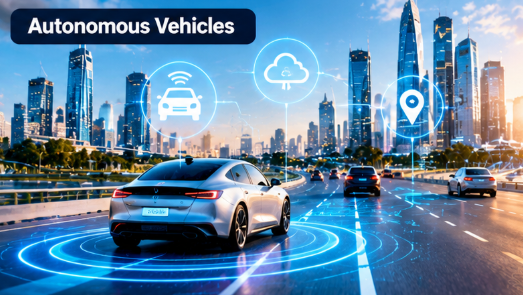
Future developments could improve autonomous vehicles, delivery systems, and transportation management. However, fully autonomous transportation still faces technical, legal, and safety challenges.
Agriculture
Farmers may use AI-powered tools to monitor crops, analyze soil conditions, detect plant diseases, and improve irrigation decisions.
Combined with sensors, drones, and automated equipment, these technologies could help make farming more efficient.
Entertainment and Media
AI is changing how digital content is produced. It can help generate images, videos, music, scripts, and other creative materials.
In the future, creators may use AI to develop personalized entertainment experiences and speed up production.
At the same time, copyright, originality, misinformation, and the ownership of AI-generated content will remain important concerns.
Will AI Replace Human Jobs?
This is one of the most common questions about the future of artificial intelligence.
The honest answer is that AI will change many jobs, but it is difficult to predict exactly how many positions will disappear or how many new ones will be created.
Some jobs involve repetitive tasks that are relatively easy to automate. Others depend heavily on human communication, physical judgment, creativity, responsibility, and decision-making.
Even within the same profession, some tasks may be automated while others become more important.
For example:
- Writers may use AI for research and initial drafts while focusing more on editing and original ideas.
- Developers may use AI coding assistants but remain responsible for software quality and security.
- Customer support employees may rely on AI for routine questions while handling complex customer problems themselves.
- Designers may use AI to explore concepts but still make important creative decisions.
The most useful approach is to learn how to work with AI rather than assume that it will either replace everyone or have no effect on employment.
What Skills Will Be Important in the Future of AI?
As AI tools become more common, people may need a different combination of technical and human skills.
Some useful skills include:
AI literacy: Understanding what AI tools can do, where they make mistakes, and how to use them responsibly.
Critical thinking: Evaluating information instead of accepting every AI-generated answer as correct.
Problem-solving: Understanding real problems and deciding how technology can help solve them.
Communication: Explaining ideas, working with people, and providing context that automated systems may not fully understand.
Technical knowledge: Learning relevant skills in programming, data analysis, cybersecurity, and automation.
Not everyone needs to become an AI engineer. However, understanding how AI works and how it affects a particular profession could become increasingly valuable.
What Challenges Could Slow Down AI Development?
Although the future of AI offers many possibilities, its development also faces important limitations.
1. Privacy and data protection
AI systems often rely on large amounts of data. Organizations must protect personal information and prevent unauthorized access or misuse.
2. Bias and unfair results
If training data contains inaccurate or biased information, AI systems may produce unfair results. Careful testing and evaluation are necessary.
3. Security threats
AI can be misused to create convincing scams, automate cyberattacks, or generate misleading content. Security measures must develop alongside AI capabilities.
4. Energy and infrastructure
Advanced AI systems require computing power, data centers, chips, and electricity. Expanding this infrastructure can be expensive and resource-intensive.
5. Reliability and human control
AI systems can still make mistakes, especially when dealing with unfamiliar situations or complicated instructions. Important decisions need suitable human oversight.
These challenges do not mean AI development will stop. They show why technical progress must be accompanied by responsible management.
What Could the Future of AI Look Like by 2030?
Predicting exactly what artificial intelligence will look like in 2030 is difficult. Technology can develop faster or slower than expected, and economic, scientific, and regulatory changes can influence its direction.
However, several developments are plausible.
AI assistants may become more deeply connected to everyday software, allowing people to complete multiple tasks through natural language instructions.
AI agents could handle more business workflows, although important actions may still require human approval.
Robotics may become more useful in controlled industrial environments and gradually expand into additional applications.
Healthcare and scientific research may benefit from improved AI-assisted analysis, while education tools may offer more personalized learning experiences.
At the same time, privacy, employment, security, and accountability will remain important concerns.
The biggest change may not be one machine or one new application. It may be the gradual integration of AI into the systems people already use every day.
Frequently Asked Questions About the Future of AI
What is the future of AI in simple words?
The future of AI is the continued development of intelligent computer systems that can help people complete tasks, analyze information, solve problems, and make better use of technology. AI is expected to become more integrated into everyday life and business.
Will AI become more powerful in the future?
AI capabilities are improving, and many researchers expect further progress. However, the speed and direction of future development remain uncertain. Technical limitations, safety requirements, and computing resources may influence progress.
Will AI replace humans in the future?
AI may automate certain tasks and change many professions, but it is unlikely that every human role will be replaced. Skills involving judgment, responsibility, communication, and complex real-world decisions will remain important.
Which industries will benefit most from AI?
Healthcare, education, finance, manufacturing, agriculture, transportation, and software development are among the industries with significant opportunities to use AI. The actual benefits will depend on how effectively each industry adopts the technology.
What will AI be capable of by 2030?
By 2030, AI systems may become more capable of handling complex digital tasks, supporting scientific research, assisting professionals, and working with robotics. However, exact capabilities cannot be guaranteed in advance.
Is AI a good career choice for the future?
AI-related careers may offer opportunities in machine learning, software development, data science, cybersecurity, automation, and AI product development. Learning AI tools alongside problem-solving and technical skills can also benefit people in other professions.
What is the biggest challenge facing the future of AI?
One of the biggest challenges is ensuring that increasingly capable AI systems remain safe, reliable, secure, and accountable. Managing employment changes, privacy, bias, and misinformation will also be important.
Final Thoughts
The future of artificial intelligence will be shaped by more than technological breakthroughs. It will depend on how people, businesses, and governments choose to develop and use these systems.
AI has the potential to make many tasks easier, support scientific discoveries, improve access to information, and help organizations work more efficiently. But it also introduces challenges that cannot be ignored.
For individuals, learning how to use AI responsibly and developing skills that complement the technology may be one of the most practical ways to prepare.
Rather than viewing artificial intelligence only as a replacement for human work, it makes more sense to understand it as a powerful technology whose long-term impact will depend on the decisions we make today.