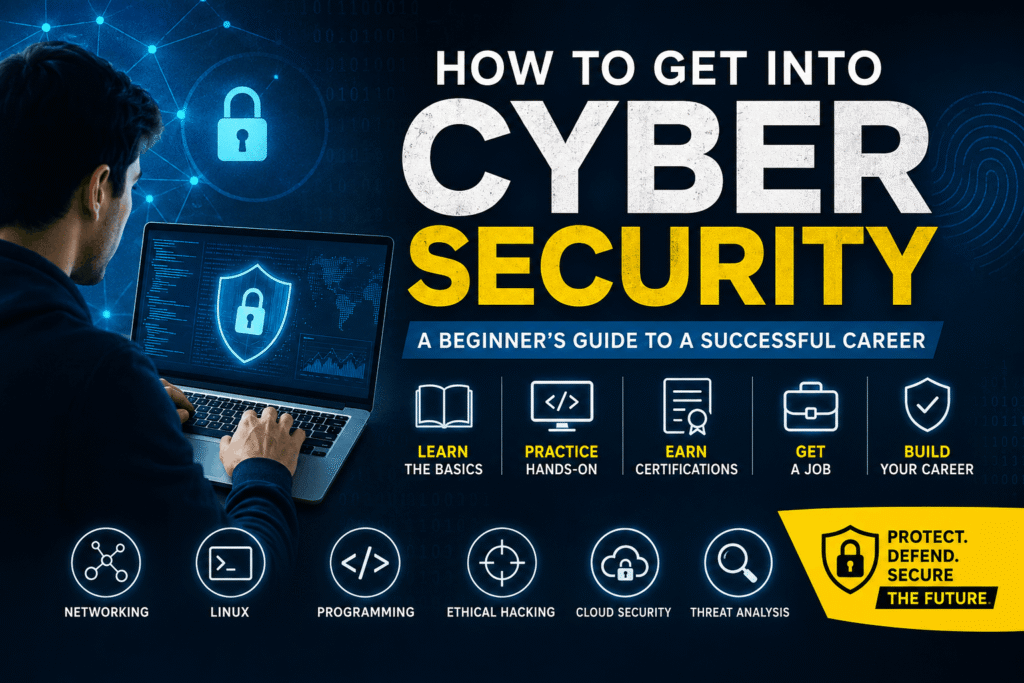
Cybersecurity is one of the most interesting areas of modern technology, but many people hesitate to explore it because they think it is too difficult to learn. They often imagine complex computer systems, advanced programming, complicated codes, and highly technical security tools.
But is cybersecurity hard for someone who is just starting out?
The honest answer is that cybersecurity can be challenging, especially when you move beyond the basics. However, it is not impossible to learn. You do not need to be a programming expert or have years of IT experience before getting started. With the right learning approach, consistent practice, and a good understanding of computer fundamentals, beginners can gradually develop the skills needed to understand cybersecurity.
In this guide, we will explain why cybersecurity can be difficult, which skills beginners need, whether coding and mathematics are necessary, how long learning may take, and how you can make the process easier.
Is Cybersecurity Hard to Learn?
Cybersecurity is not necessarily hard to learn, but it does require patience and continuous practice. The difficulty depends on your previous experience, the area you want to study, and how much time you can dedicate to learning.
For example, understanding basic online safety, passwords, phishing attacks, and common security threats is relatively straightforward. However, more advanced subjects such as penetration testing, network security, malware analysis, and incident response require deeper technical knowledge.
Someone who already understands computers and networking may find cybersecurity easier to approach. A complete beginner might need more time to understand these fundamentals first.
The important thing is to avoid trying to learn everything at once. Cybersecurity is a broad field, and you can start with simple concepts before moving toward more technical subjects.
Why Is Cybersecurity Difficult for Beginners?
There are several reasons why beginners sometimes find cybersecurity challenging. Understanding these difficulties can help you prepare for the learning process.
1. There Are Many Technical Concepts
Cybersecurity includes several technical subjects, including computer networks, operating systems, encryption, firewalls, authentication, and security protocols.
These concepts may sound unfamiliar when you first encounter them.
For example, understanding how data travels across a network or how encryption protects information takes some time. You may also need to learn how different operating systems manage files, permissions, and user accounts.
The best approach is to understand each concept separately instead of trying to study everything together.
2. Networking Knowledge Takes Time
Networking is an important part of cybersecurity because computers, servers, and other devices communicate through networks.
Beginners may need to understand concepts such as:
- IP addresses
- DNS
- TCP and UDP
- Routers and switches
- Ports and protocols
- Network traffic
These concepts become easier when you connect them to real-world examples.
For instance, when you visit a website, your device communicates with servers through a network. Understanding this process provides a useful foundation for learning how attackers and security professionals identify network weaknesses.
3. Cybersecurity Requires Problem-Solving Skills
Cybersecurity professionals often investigate unusual activity, identify vulnerabilities, and determine why a security problem occurred.
This requires logical thinking and the ability to approach problems from different angles.
For example, if a company experiences an unexpected login attempt, a security professional may need to investigate where it came from, whether an account was compromised, and what actions should be taken.
You do not need to be an expert problem-solver before starting. These skills develop through practical exercises and experience.
4. Technology Keeps Changing
Cyber threats and security technologies continue to evolve. New software vulnerabilities, attack methods, and defensive techniques appear over time.
This means cybersecurity is not a subject you learn once and completely finish.
Professionals need to stay updated by reading security reports, studying new technologies, and improving their technical knowledge.
For beginners, this can seem overwhelming. However, you do not need to follow every new development immediately. Start with fundamental knowledge and gradually explore more advanced topics.
Do You Need Coding Skills to Learn Cybersecurity?
No, you do not need advanced coding skills to start learning cybersecurity.
Some areas of cybersecurity involve programming, while others focus more on security monitoring, risk management, compliance, and investigation.
However, learning basic programming can make certain cybersecurity tasks easier.
Python is a useful starting point because it can help with automation, data analysis, and security-related scripts. Understanding basic scripting can also help you work more efficiently with different tools.
Other programming and scripting languages you may encounter include:
- Python: Useful for automation and security scripts.
- Bash: Helps manage tasks in Linux environments.
- PowerShell: Commonly used for Windows administration and automation.
- JavaScript: Helpful for understanding web application security.
- SQL: Useful when studying database security and SQL injection vulnerabilities.
You do not need to learn all these languages at the beginning. Start with basic computer knowledge and explore programming when it becomes relevant to your chosen cybersecurity area.
Do You Need Math to Learn Cybersecurity?
Cybersecurity generally does not require advanced mathematics for beginners.
Basic mathematical skills, logical reasoning, and problem-solving are enough to get started with many areas of the field.
For example, someone interested in security monitoring or basic network protection may not need complicated mathematical knowledge.
However, mathematics becomes more important in specialized areas such as cryptography, where professionals work with encryption algorithms, number theory, and mathematical concepts.
If you are not particularly strong in mathematics, that should not stop you from exploring cybersecurity. You can choose a learning path that matches your interests and gradually develop any additional skills you need.
What Should You Learn First in Cybersecurity?
If you are a complete beginner, building a strong foundation is more useful than immediately jumping into advanced security tools.
Here are some important subjects to study first.
1. Computer Fundamentals
Start by understanding how computers work, how operating systems manage information, and how users interact with different applications.
Learn basic concepts such as files, folders, permissions, processes, software installation, and system updates.
2. Networking Basics
Understand how devices communicate with each other.
Learn about IP addresses, DNS, routers, ports, protocols, and network connections. These concepts will help you understand how networks operate and where security problems can occur.
3. Operating Systems
Become familiar with Windows and Linux.
Linux is particularly useful in many cybersecurity learning environments because security professionals frequently use Linux-based tools and systems.
Learn basic terminal commands, file management, permissions, and user administration.
4. Basic Security Concepts
Study common security principles, including:
- Confidentiality, integrity, and availability.
- Authentication and authorization.
- Multi-factor authentication.
- Encryption and secure communication.
- Firewalls and antivirus software.
- Phishing and social engineering.
- Vulnerabilities and security patches.
These fundamentals provide the knowledge needed to understand more advanced cybersecurity subjects.
5. Practical Security Exercises
Theory alone is not enough. You should also practice what you learn.
You can use beginner-friendly cybersecurity training platforms such as TryHackMe and OverTheWire to explore security concepts through guided exercises.
Always practice in authorized environments and use systems designed for cybersecurity training.
How Long Does It Take to Learn Cybersecurity?
There is no fixed timeline for learning cybersecurity because everyone starts with a different level of knowledge.
Some people already understand computer systems and networking, while others are completely new to technology.
Your progress also depends on how consistently you study and practice.
Here is an example of how a beginner might organize their learning:
| Learning Stage | Suggested Time | Main Focus |
|---|---|---|
| Computer fundamentals | 2–4 weeks | Basic computer knowledge |
| Networking basics | 3–6 weeks | IP addresses, DNS, and protocols |
| Operating systems | 3–5 weeks | Windows and Linux |
| Security fundamentals | 4–6 weeks | Threats and protection |
| Practical exercises | Ongoing | Hands-on learning |
These are suggested study periods, not guaranteed completion times. Some learners may progress faster, while others may need additional practice.
Becoming comfortable with basic cybersecurity concepts is different from becoming job-ready. Professional skills require deeper knowledge, practical experience, and continued learning.
Which Cybersecurity Skills Are Most Important?
If you want to build a foundation in cybersecurity, focus on developing skills that help you understand, investigate, and prevent security problems.
Technical Skills
Technical knowledge is important in most cybersecurity roles. Useful areas include networking, operating systems, security tools, system administration, and basic scripting.
You do not need to master everything immediately. Focus on the skills that support your learning goals.
Analytical Thinking
Cybersecurity professionals need to examine information, recognize unusual patterns, and understand potential risks.
Good analytical thinking helps you investigate problems rather than simply guessing what happened.
Attention to Detail
Small mistakes can sometimes create serious security weaknesses.
For example, an incorrectly configured firewall rule or an outdated software component may expose a system to unnecessary risks.
Learning to notice small details is an important part of cybersecurity work.
Communication Skills
Cybersecurity is not only about computers and technical tools.
Professionals often explain security risks, write reports, share recommendations, and communicate with teams that may not have technical backgrounds.
Clear communication makes it easier to explain problems and help organizations improve their security.
Is Cybersecurity Harder Than Other IT Fields?
Cybersecurity is different from other IT fields, and comparing its difficulty is not always straightforward.
Web development, software engineering, networking, and system administration all require different skills.
For example, web development often involves programming languages, frameworks, and application design. Networking focuses on communication between devices and systems. Cybersecurity combines knowledge from several technical areas to protect systems and information.
This is one reason cybersecurity can feel challenging to beginners: it brings together concepts from different parts of technology.
However, the difficulty also depends on your interests. Someone who enjoys investigating problems and understanding how computer systems work may find cybersecurity exciting rather than overwhelming.
Instead of choosing a field based only on which one seems easiest, consider the type of work you enjoy.
How to Make Learning Cybersecurity Easier
Learning cybersecurity becomes more manageable when you follow a structured approach.
Here are some practical tips that can help you make steady progress.
Start With the Basics
Do not begin with advanced penetration testing or complex security tools.
First, understand computer fundamentals, networking, operating systems, and basic security principles.
A strong foundation makes advanced subjects easier to understand.
Choose One Learning Path
Cybersecurity includes several specializations, such as:
- Network security
- Ethical hacking
- Cloud security
- Security operations
- Digital forensics
- Application security
Explore these areas gradually and choose one that matches your interests.
Practice Regularly
Try to spend some time practicing instead of only watching tutorials.
Set up a safe learning environment, complete guided exercises, and experiment with basic security concepts.
Consistent practice helps you understand how theoretical knowledge applies to real situations.
Use Free Learning Resources
You do not always need expensive courses to get started.
Resources such as Cisco Networking Academy, TryHackMe, and OverTheWire offer learning opportunities for people interested in technology and cybersecurity.
You can also use official documentation to understand how operating systems and security tools work.
Be Patient With Your Progress
Some cybersecurity concepts may take several attempts to understand.
Do not become discouraged if a networking topic or technical exercise feels difficult at first.
Focus on making gradual improvements rather than trying to master everything immediately.
Is Cybersecurity a Good Choice for Beginners?
Cybersecurity can be a good choice for beginners who enjoy technology, problem-solving, and continuous learning.
The field offers different career paths, so you are not limited to one type of technical work.
For example, you could eventually explore security analysis, network protection, cloud security, incident response, or ethical hacking.
However, it is important to understand that learning basic cybersecurity does not automatically qualify someone for a professional position.
Employers may expect practical experience, technical knowledge, certifications, or other relevant qualifications depending on the role.
A sensible approach is to develop your fundamentals, complete practical exercises, build small projects, and explore entry-level opportunities when your skills are ready.
Frequently Asked Questions
1. Is cybersecurity hard for someone with no IT experience?
Cybersecurity can feel challenging if you have no IT experience, but beginners can learn it step by step. Start with computer fundamentals, networking, and operating systems before moving toward advanced security topics.
2. Can I learn cybersecurity without coding?
Yes. You can begin learning cybersecurity without programming experience. Some areas require little coding, while others benefit from scripting and programming knowledge.
3. Is cybersecurity harder than programming?
It depends on your interests and learning background. Programming focuses heavily on writing and understanding code, while cybersecurity involves networking, systems, security principles, investigation, and sometimes programming.
4. How many hours should I study cybersecurity each day?
There is no fixed requirement. Beginners can start with 30 to 60 minutes of focused learning each day. Regular practice and consistency are more important than studying for long hours occasionally.
5. Can I learn cybersecurity at home?
Yes. You can learn many cybersecurity fundamentals at home using online courses, documentation, virtual machines, and authorized practice platforms.
6. What is the easiest cybersecurity skill to learn first?
Basic online security is a good starting point. Learn about strong passwords, multi-factor authentication, phishing, software updates, and common security threats before exploring more technical subjects.
Final Thoughts
So, is cybersecurity hard? It can be challenging, but that does not mean it is beyond the reach of beginners.
The most difficult part is often understanding unfamiliar technical concepts and learning how different systems work together. Once you build a foundation in computer basics, networking, operating systems, and security principles, more advanced topics become easier to approach.
You do not need to know everything before starting, and you do not need to become an expert overnight. Focus on one subject at a time, practice regularly, and choose a learning path that matches your interests.
With patience and consistent effort, cybersecurity can become a rewarding field to explore and develop skills in.